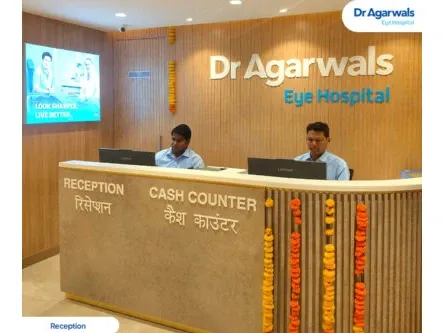
Dr Agarwals Eye Hospital - Aurangabad, Maharashtra
Address
Ved Vista Tower, 2nd & 3rd Floor, Jalna Rd, above Chandukaka Saraf Jwellers, N-3, N 3, Cidco, Chhatrapati Sambhajinagar, Aurangabad - 431002
Opening Hours
Mail ID
care@dragarwal.com
Phone
Myopia
Non-Surgical Treatment Options for Myopia
Myopia Treatment: Effective Ways to Correct Nearsightedness
Myopia, commonly known as nearsightedness, is a vision condition where distant objects appear blurry while close objects remain clear. This condition occurs when the eye’s shape causes light to focus in front of the retina rather than directly on it. With the increasing use of digital screens and lifestyle changes, myopia has become a prevalent vision problem worldwide. Fortunately, various myopia treatments are available to correct vision and prevent further deterioration.
In this comprehensive guide, we will discuss the types of myopia, effective myopia correction lenses, eye exercises for myopia, and both non-surgical and surgical approaches for the correction of myopia.
Treatment Options for Myopia (Nearsightedness)
There are several treatment options for myopia (nearsightedness) that help improve vision clarity and reduce dependency on corrective lenses. These options include non-surgical treatments such as corrective lenses and specialized eye exercises, as well as surgical interventions for those seeking a more permanent solution.
Non-Surgical Treatment Options for Myopia
1. Prescription Eyeglasses
Eyeglasses are the most common and non-invasive solution for myopia. They correct refractive errors by adjusting how light focuses on the retina. There are different types of lenses used for myopia correction, including:
- Single Vision Lenses – Corrects distance vision.
- Bifocal or Progressive Lenses – Suitable for individuals who need both near and distance vision correction.
2. Contact Lenses
For those who prefer an alternative to glasses, contact lenses provide effective myopia correction by sitting directly on the eye’s surface. Types of contact lenses for myopia include:
- Soft Contact Lenses – Comfortable and widely used.
- Rigid Gas Permeable (RGP) Lenses – Provide sharper vision and are ideal for high myopia.
- Orthokeratology (Ortho-K) Lenses – Special overnight lenses that reshape the cornea temporarily to provide clear daytime vision.
3. Atropine Eye Drops
Low-dose atropine eye drops have been shown to slow the progression of progressive myopia in children. These drops help reduce eye elongation, a major cause of worsening myopia.
4. Myopia Control Glasses or Contact Lenses
Specialized myopia control lenses help slow down myopia progression, especially in children.
5. Eye Exercises for Myopia
Although eye exercises cannot reverse myopia, they help in reducing eye strain and improving focus flexibility. Some common exercises include:
- Blinking exercises to prevent dry eyes from excessive screen time.
- Focus shifting between near and distant objects.
- Palming technique to relax eye muscles.
Surgical Options for Myopia Correction
Treatment Options for Myopia (Nearsightedness)
There are several treatment options for myopia (nearsightedness) that help improve vision clarity and reduce dependency on corrective lenses. These options include non-surgical treatments such as corrective lenses and specialized eye exercises, as well as surgical interventions for those seeking a more permanent solution.
Surgical Options for Myopia Correction
For those looking for long-term solutions, surgical interventions are available to correct myopia permanently. These procedures reshape the cornea to improve how light focuses on the retina.
1. LASIK (Laser-Assisted in Situ Keratomileusis)
LASIK is the most popular laser eye surgery for myopia correction. It involves reshaping the cornea to allow light to focus directly on the retina, leading to clearer vision.
- Pros: Quick recovery, minimal discomfort, effective for moderate myopia.
- Cons: Not suitable for individuals with very thin corneas or severe myopia.
2. PRK (Photorefractive Keratectomy)
PRK is an alternative to LASIK for those with thin corneas. Instead of creating a corneal flap, the outermost layer of the cornea is removed, and laser treatment is applied to reshape the cornea.
- Pros: Effective for those unsuitable for LASIK.
- Cons: Longer recovery time compared to LASIK.
3. SMILE (Small Incision Lenticule Extraction)
SMILE surgery is a minimally invasive laser procedure where a small disc of corneal tissue is removed through a keyhole incision to correct myopia.
- Pros: Faster recovery and less dry eye than LASIK.
- Cons: Limited suitability for very high myopia.
4. Implantable Collamer Lenses (ICL)
ICL surgery involves implanting a corrective lens inside the eye to treat high myopia. Unlike LASIK, no corneal tissue is removed.
- Pros: Reversible and suitable for extreme myopia.
- Cons: Involves a slightly higher risk than LASIK.
5. Refractive Lens Exchange (RLE)
This procedure is similar to cataract surgery, where the natural eye lens is replaced with an artificial intraocular lens (IOL) to correct myopia.
- Pros: Ideal for older individuals with high myopia.
- Cons: Not recommended for younger patients.
Myopia Treatment in
Myopia, also known as nearsightedness, is a common vision condition in which distant objects appear blurred while nearby objects can usually be seen clearly. At Agarwal in Chhatrapati Sambhajinagar,Aurangabad, our eye specialists provide comprehensive evaluation and personalized myopia treatment based on the patient's age, vision requirements, eye health and degree of myopia.
Myopia can be managed through different approaches depending on the patient's condition, including:
- Prescription glasses or contact lenses
- Prescribed eye drops for selected patients
- Myopia management for children
- Laser vision correction for eligible adults
A detailed eye examination helps determine the most suitable treatment approach.
What Is Myopia (Nearsightedness)?
Myopia occurs when the eye focuses light in front of the retina rather than directly on it. This causes distant objects to appear unclear, while close objects may remain easier to see. Myopia can develop during childhood and adolescence and may progress over time.
What Are the Symptoms of Myopia?
Common symptoms of myopia include:
- Blurred distance vision
- Difficulty seeing distant objects clearly
- Squinting to see distant objects
- Eye strain or visual fatigue
- Headaches
- Difficulty reading classroom boards or road signs
- Frequent changes in glasses prescription
If you experience persistent blurred distance vision, an eye examination can help determine whether myopia is present.
What Causes Myopia?
Myopia can be influenced by genetic and environmental factors. Factors associated with myopia may include:
- Family history of myopia
- Childhood and adolescent eye development
- Prolonged near-work activities
- Limited time spent outdoors
- Individual visual and environmental factors
How Is Myopia Diagnosed?
A comprehensive eye examination is important for accurately identifying myopia and determining its severity. At Agarwal in Chhatrapati Sambhajinagar,Aurangabad the eye specialist may perform:
- Visual acuity testing
- Refraction testing
- Eye health examination
- Assessment of the degree of myopia
- Additional tests when clinically required
The results help the eye specialist determine the most appropriate vision correction or treatment approach.
Myopia Testing for Children
Children may not always recognize or communicate that their distance vision is blurred. Parents may notice signs such as:
- Sitting close to the television
- Difficulty seeing the classroom board
- Squinting frequently
- Holding books or devices very close
- Complaining about blurred distance vision
- Frequent eye rubbing
Regular vision assessments can help identify myopia early and allow appropriate management to be started when required.
Myopia Treatment Options
The appropriate myopia treatment depends on factors such as age, prescription, eye health, lifestyle and whether the condition is stable or progressing.
Corrective Lenses for Myopia
Prescription glasses and contact lenses are commonly used to correct blurred distance vision caused by myopia. Corrective lenses for myopia help focus incoming light correctly on the retina, allowing clearer vision.
The appropriate prescription should be determined following a comprehensive eye examination.
Myopia Eye Drops
Certain prescription myopia eye drops may be used in selected patients, particularly children with progressive myopia. Low-dose atropine eye drops may be considered by an eye specialist as part of a myopia management plan.
The type, concentration and duration of treatment should be determined by an ophthalmologist based on the patient's individual condition.
Laser Eye Surgery for Myopia
Laser eye surgery for myopia may be an option for eligible adults who want to reduce their dependence on glasses or contact lenses.
Laser vision correction may involve:
- Pre-operative eye evaluation
- Assessment of corneal health
- Measurement of refractive error
- Selection of an appropriate laser procedure
- Post-operative follow-up
Not every person with myopia is suitable for laser vision correction. A detailed evaluation is required before treatment.
LASIK Eye Surgery for Myopia
LASIK eye surgery for myopia is a laser vision correction procedure that reshapes the cornea to help focus light correctly on the retina.
Potential benefits for suitable candidates include:
- Reduced dependence on glasses or contact lenses
- Improved distance vision
- Quick visual recovery in many suitable patients
- Personalized treatment based on the individual's eye measurements
Before considering LASIK, patients undergo a detailed assessment to determine whether the procedure is appropriate.
Myopia Eye Surgery: Who Can Consider It?
Myopia eye surgery may be considered for suitable adult patients after a comprehensive eye evaluation.
Factors that may be assessed include:
- Age
- Stability of the spectacle prescription
- Corneal thickness and shape
- Degree of refractive error
- Overall eye health
- Presence of other eye conditions
- Results of pre-operative testing
An eye specialist can recommend the most appropriate option after assessing your individual eye condition.
Myopia Eye Surgery Cost in {Aurangabad}
The myopia eye surgery cost can vary depending on several factors, including:
- Type of procedure
- Laser technology used
- Pre-operative evaluation
- Individual eye condition
- Treatment requirements
- Follow-up care
Similarly, the laser eye surgery myopia cost may differ between patients depending on their prescription and the procedure recommended.
A consultation and detailed eye examination can help determine whether laser vision correction is suitable and provide a more accurate treatment estimate at Agarwal in Chhatrapati Sambhajinagar,Aurangabad.
Myopia Treatment for Children and Adults
Myopia Treatment for Children
Myopia in children requires regular monitoring because the prescription can change as the child grows.
Management may include:
- Appropriate prescription glasses or contact lenses
- Regular eye examinations
- Monitoring of myopia progression
- Outdoor activities and healthy visual habits
- Prescribed myopia-management treatments when clinically appropriate
If myopia is progressing, an eye specialist can recommend an appropriate management plan based on the child's age and eye health.
Myopia Treatment for Adults
Adults with myopia may use prescription glasses or contact lenses to achieve clear vision. Adults who want to reduce their dependence on corrective lenses may also be evaluated for laser vision correction such as LASIK.
Suitability for surgery depends on factors such as:
- Stable prescription
- Healthy corneas
- Suitable eye measurements
- Overall eye health
- Individual treatment requirements
Can Myopia Be Cured Naturally?
There are many searches for myopia natural remedies and a natural way to cure myopia. Healthy lifestyle habits can support overall eye health, but established myopia should not be assumed to disappear through home remedies alone.
Helpful eye-health habits may include:
- Spending adequate time outdoors
- Taking regular breaks during prolonged near work
- Maintaining appropriate reading and screen distances
- Having regular eye examinations
- Following the eye specialist's recommendations
Appropriate correction or clinically recommended myopia management should be followed when required.
How Can Myopia Be Prevented From Getting Worse?
Myopia progression cannot always be completely prevented, but appropriate management and healthy visual habits may help support eye health.
Important measures include:
- Regular eye examinations
- Monitoring changes in vision
- Using the correct prescription
- Spending more time outdoors, particularly for children
- Taking breaks during prolonged near-work activities
- Following the recommended myopia-management plan
When Should You See an Eye Specialist for Myopia?
You should consider an eye examination if you experience:
- Blurred distance vision
- Frequent changes in your prescription
- Difficulty seeing distant objects
- Headaches or eye strain
- Difficulty seeing clearly at school
- Difficulty seeing road signs while driving
- Sudden or noticeable changes in vision
- If you are looking for myopia treatment in Chhatrapati Sambhajinagar,Aurangabad, Agarwal provides comprehensive eye examinations and personalized treatment options based on your individual vision and eye-health requirements.